
I love science-fiction books set in the far future. And I’m not talking mere tens of thousands of years—I mean tens of millions, even hundreds of millions of years in the future. In most of my favorite tales of the distant future, our world is unrecognizable—the sun is swollen, nearing the end of its life, and our time is but a fragment of a vast forgotten past.
As a reader, I’m drawn to the pure imagination found in these stories. As a writer, I love the liberation the extreme future offers, the opportunity to just cut loose and not be constrained by whatever trends we think will control our lives a few paltry years out. It forces the writer into some serious world-building, since it requires constructing societies, technologies, even animal life, from scratch. But that’s part of the fun.
Very few writers can pull off that kind of setting well. These are my favorites, in no particular order:
The Dying Earth by Jack Vance (1950) is a book that many sci-fi fans  have heard about, but not as many have read. It was out of print for a long time, and was a hard book to find in used bookstores. In this future Earth, a red, exhausted sun drags itself across the dark blue sky. Technology has been developed so long ago that people don’t even understand how most of it works, and is often treated as if it were magic, with characters wielding technology like wizards conjuring spells.
Vance remembers one of the most important rules of far-future fiction—the people of those times won’t act like we will. They’ll have different motivations and perspectives, and so it is with the strange, often brutal, swashbuckling protagonists of these tales.
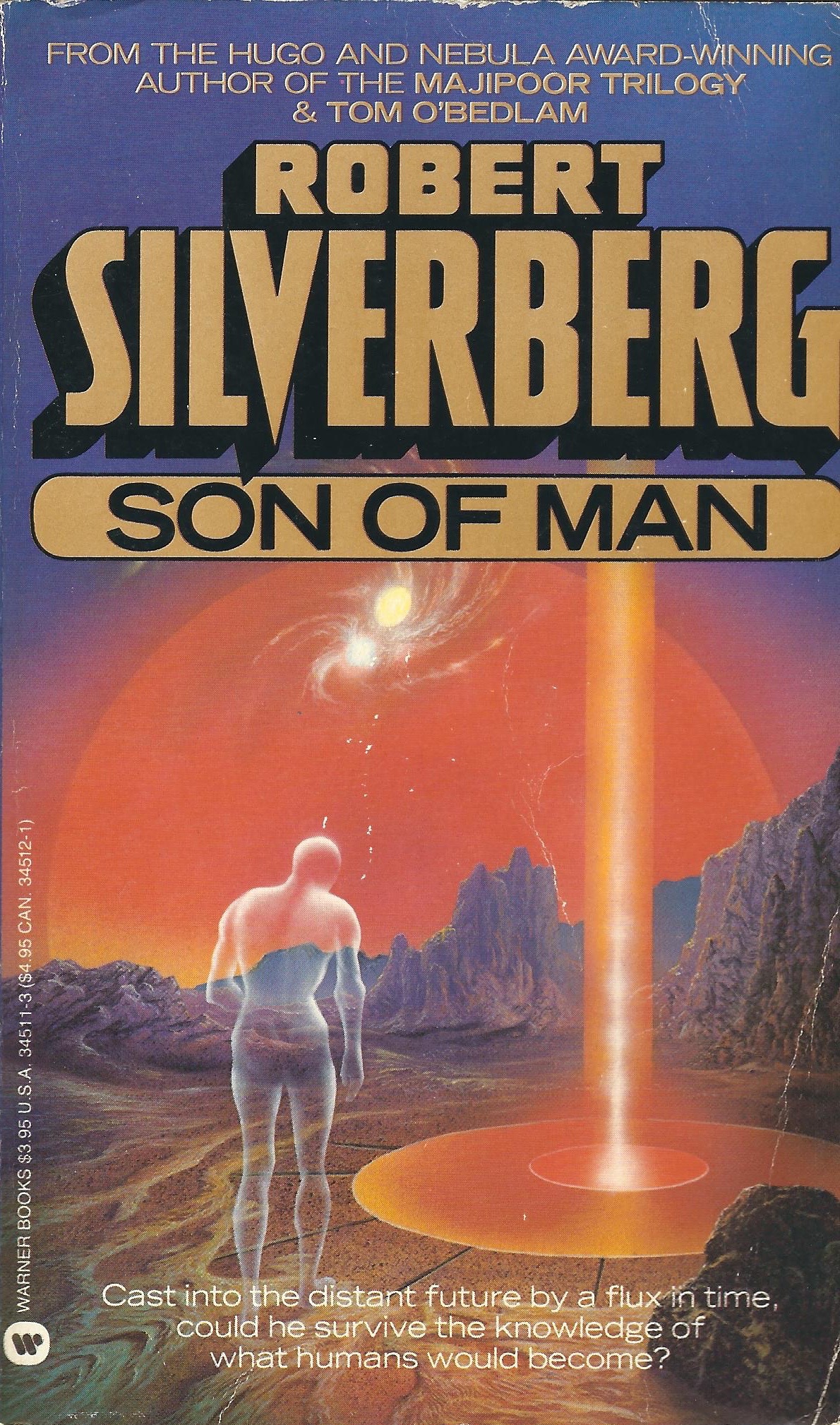 In Son of Man by Robert Silverberg (1971) we follow Clay, a man of the 20th Century who has become lost in a mostly unexplained time flux. He ends up in a future so distant that all that remains of humanity are a handful of bizarre descendant species—carefree, but immensely powerful Skimmers, unmoving Awaiters, bear-like Destroyers. The planet Mercury is gone, as are Saturn’s rings. As he explores the future Earth with Skimmers who’ve befriended him, Clay meets other humans from times in between that have also been flung forward by the time flux. Most of them are unrecognizable as people.
The tone of this novel is downright trippy, the kind of book that many readers assume must have been written during a drug-fueled binge, but anyone who knows anything about Silverberg knows of his writerly discipline. You don’t write 82 novels under your own name, plus a couple hundred more under pen names, 71 non-fiction books, edit dozens of short story collections and produce more than 450 short stories and novelettes if you’re away from your typewriter getting wasted. No, this book is just pure imagination in flight.
Of all the books mentioned here, The Night Land by William Hope Hodgson (1912) is the strangest. As the title suggests, the Earth is a land of eternal night, as the sun itself has burned out. The world is lit only by the glow of the “Earth Current” that sustains what is left of the human race. All of humanity lives in the Last Redoubt, a miles-high pyramid, and dares not venture out, as they are beset on all sides by horrifying demonic beasts and bizarre aliens. Only ancient technology keeps the monsters at bay.
The hero is the reincarnated soul of a man from our millennium who leaves the sanctuary of the Redoubt to search for a soulmate from a past life who may survive in a legendary second Redoubt. His journey is epic in every sense of the word.
This book is too long, often redundant, and the author adopted an archaic style that takes a while to get into. Yet once you read it, you can’t get the haunting landscape out of your head.
Since The Night Land is old enough to be in the public domain, other writers have picked up the setting and run with it. The most noteworthy is John C. Wright’s Awake in the Night Land.
The Book of The new Sun by Gene Wolf (1980-) is made up of four 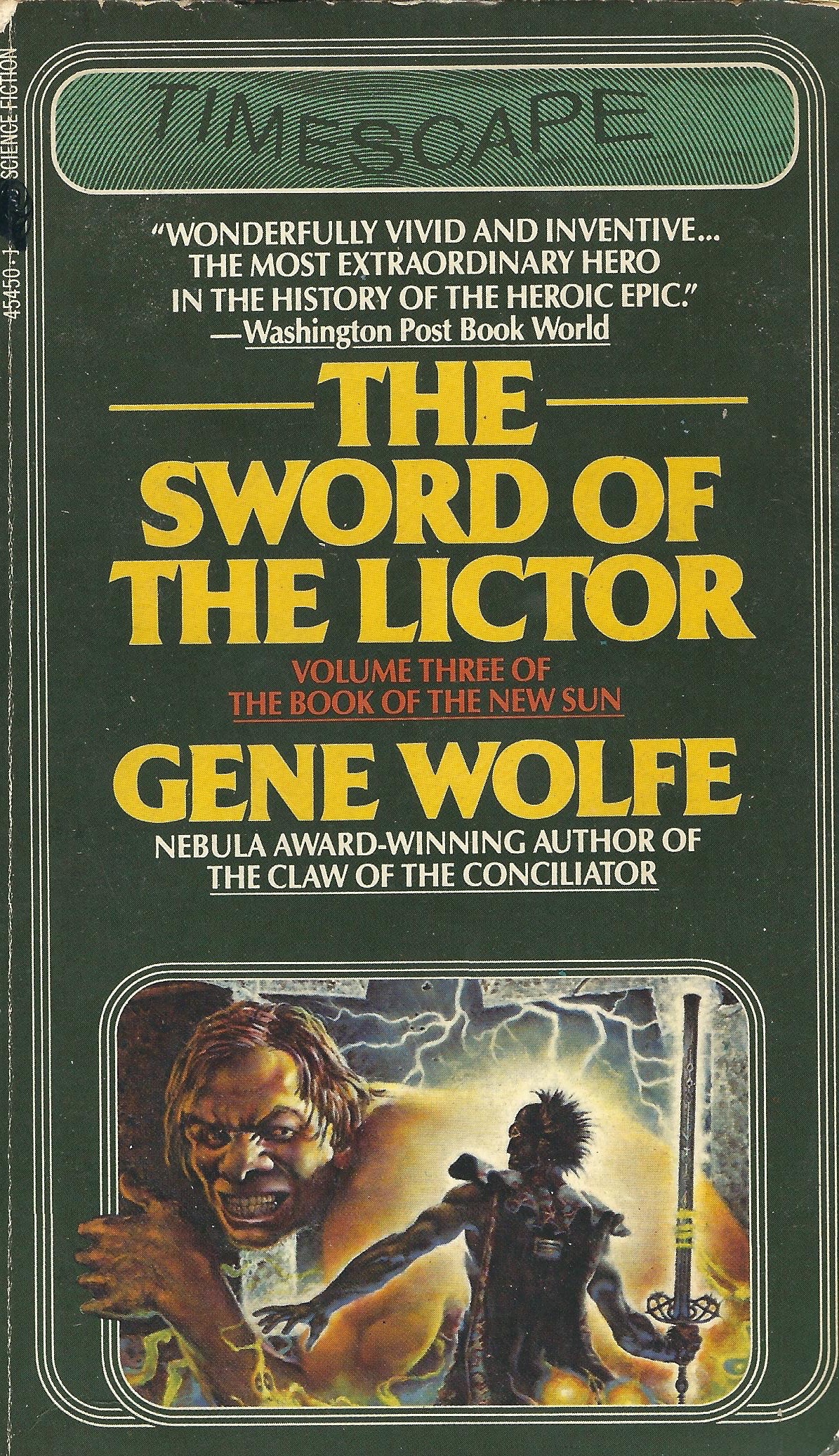 volumes—The Shadow of the Torturer, The Claw of the Conciliator, The Sword of the Lictor, and The Citadel of the Autarch.
Severian the Torturer is the main character, and he’s the classic unreliable narrator. Across the four books we learn there is more to Severian than first suspected, and his role in humanity’s future is larger than anyone could have guessed. Severian’s journey takes us across an Earth unlike any we’ve encountered. Wolfe does a great job of imparting the weight of time upon the residents of this old Earth. Digging into the ground anywhere uncovers layers of lost and forgotten civilizations. Gene Wolfe is a great writer, one of the best in SF, and this is his masterwork. He carries on the tale in The Urth of the New Sun, which sees Severian travel the stars and secure mankind’s destiny.


 Imagination, with a cover by Frank Bruno. It caught my eye in particular because of the the Fritz Leiber story blurbed on the cover. Leiber’s Fafhrd and the Gray Mouser books were a major influence behind my teenage enthusiasm for sword-and-sorcery novels, but his stuff was never just pulp. Leiber went on to be named one of the earliest science-fiction Grandmasters by the SFWA.
 runs with
  Of course, my heart has always been in the science-fiction and fantasy fields, and I found some gems here in 2016. Vaughn Heppner is one of those indies who sells so many books it makes my head spin, so I downloaded
  This was also a year for short stories. I started the year picking my way through Neil Gaiman’s
  In my role as editor, I get the first look at a lot of fun and compelling fiction. I’ve enjoyed working with Kate Baray on her
  Being a writer, I have a library, and it’s a pretty good one. Despite the fact that my bookshelves groan and creak from the amount of paper I cram into them, I’m always on the lookout for more.
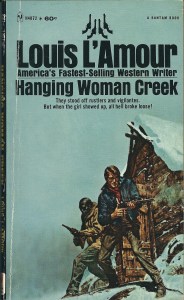
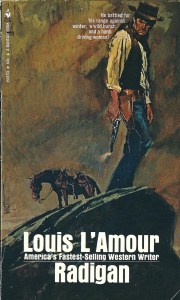 Louis L’Amour was one of the greatest genre writers of all time. He died in 1988 but his books are still in print, and his sales count is somewhere north of 320 million copies and climbing. Besides being great reads, the four paperbacks I scooped up for a buck are a great window into a particular period of mass market publishing.
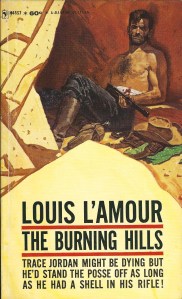 That was a pretty standard genre novel back then. An inexpensive 120-page paperback is a format that has all but disappeared from bookstore shelves, although the short novel has found new life in the ebook era. My own Connor Rix SF thrillers (look over in the sidebar) run in the 50,000-word range, and I’ve found that to be a comfortable length for telling a complete story without saddling the reader with a long slog.
 captures a particular flavor of 1960s illustration. Sadly, none of the cover artists are credited in these books. The Radigan cover has a signature, but I can’t read it. The style is reminiscent of Fred Pfeiffer’s, but I’m pretty sure he didn’t do these. Sharp-eyed followers of Western art will no doubt recognize these brushstrokes; if so, drop a line in the comments.
 novels at Malvern Books on W. 29th Street as part of an
  It’s been five years since the Doom shook the world to its foundations. Rivers of stars disappeared from the night sky, the sun erupted with an outbreak of flares that scorched the Eastern Hemisphere, and an infestation of previously unknown parasites turned millions of people into mindless roaming hordes of cannibals.
 Rocket Cars to Mars